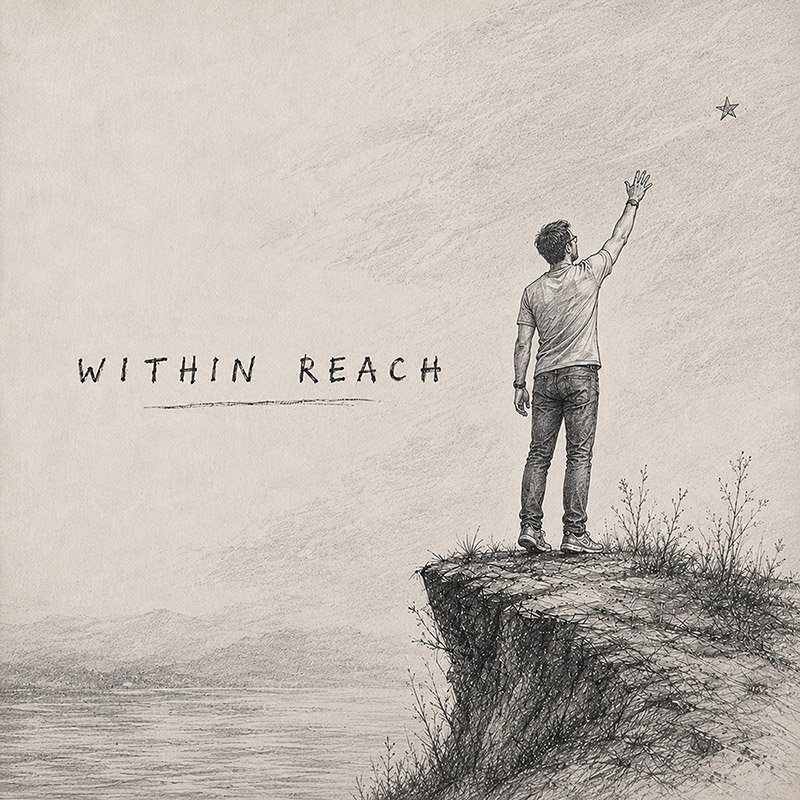
There are lives that appear intact from the outside.
A house. A stable income. Children who have what they need. Bills paid before they become emergencies. Enough money for medicine, education, repairs, perhaps even a future that looks less exposed than the past.
Nothing is visibly collapsing.
The structure stands.
And yet someone is gradually disappearing from the life he has built.
Not physically. He may be in the next room. His coat is near the door. His coffee is beside the laptop. His family can see him, speak to him, sometimes even touch him.
But his attention belongs elsewhere.
There is always a message waiting, a decision that cannot be postponed, a problem that may become more expensive if ignored. Even when he is no longer working, work continues inside him: rehearsing conversations, calculating risks, arranging tomorrow before today has ended.
He is present in the house, but absent from the life taking place inside it.
The distance may be only a few metres.
That is what makes it difficult to name. Physical absence is simple. A person is gone, and everyone understands the shape of the loss. But what do we call someone who comes home and never quite arrives?
A child may not understand why a father in the next room is less reachable than one hundreds of kilometres away. A partner may discover that geographical distance is sometimes easier to endure than this strange proximity: a body at home, a mind permanently held elsewhere.
He will come later.
After the call. After the deadline. After this unusually difficult week. After the project stabilizes. After the next payment. After there is a little more saved. After the immediate danger passes.
He probably means it.
That is part of the cruelty.
The promise is rarely a conscious lie. Each time, it may feel sincere. He truly believes that the pressure is temporary, that the present imbalance is a necessary passage toward a more human life.
But the passage has no natural end.
Work does not finish. It changes form.
One project closes and reveals another. One financial threshold is reached, and from that new height the future looks even more expensive. The family now has more to protect, more to maintain, more commitments that depend on the same pace continuing.
The reward for surviving pressure can be a life that requires even more pressure to preserve.
What began as effort becomes infrastructure.
What began as a temporary sacrifice becomes the operating system of the family.
He may no longer be working toward freedom. He may be working to prevent the collapse of everything his work has created.
And perhaps there are good reasons.
Jobs disappear. Companies restructure. Markets turn. People become ill. Parents grow old. Children need opportunities that cost money. Savings lose value. Governments fail. Accidents arrive without asking whether a family is emotionally prepared.
Security is not a childish fantasy.
The threats are not entirely imagined.
But fear can be realistic and still become excessive.
There is no final amount of money that makes loss impossible. No professional position high enough to eliminate vulnerability. No reserve large enough to silence every future catastrophe.
Every wall built against uncertainty reveals another direction from which uncertainty may enter.
Protection expands.
The stronger the structure becomes, the more energy it demands. The more it contains, the more unbearable its loss appears. He becomes the architect of safety, then its engineer, then its guard, then the person who spends all his time repairing the walls he built.
He circles the structure from the outside, checking for cracks.
Inside, life continues.
Children move through stages that seem ordinary while they are happening and irretrievable only later. Small rituals form without him. Conversations shorten because everyone learns when not to interrupt. A partner may stop asking for attention and begin asking only for practical things, because practical things can still reach him.
The family adapts.
Adaptation is not necessarily agreement. It is simply what living systems do when a condition lasts long enough.
Perhaps they are grateful. Perhaps they are angry. Perhaps both feelings become impossible to separate.
He may hear the complaint and experience it as injustice.
How can anyone say he is absent when his labour is everywhere?
It is in the house, the school, the food, the insurance, the absence of panic when something breaks. He has converted his time into stability. He has taken pressure into himself so that others do not have to carry it.
What else should care look like in a world that punishes unpreparedness?
The question cannot be dismissed.
To slow down may not feel like balance. It may feel like negligence. Rest can resemble exposure. Refusing another opportunity can resemble failure. The instinct to protect merges with the instinct to achieve until it becomes difficult to tell them apart.
And perhaps that distinction is where the discomfort begins.
It is tempting to call everything sacrifice.
Sacrifice has moral clarity. It suggests that something precious was surrendered because there was no better way. It places pain inside a meaningful exchange:
I gave this so that they could have that.
Perhaps he did.
But the language of sacrifice can also prevent another question from being asked.
Was this exact price necessary?
Not whether work was necessary. Not whether money mattered. Not whether the outside world was dangerous.
But whether the scale of the sacrifice was inevitable.
Whether every additional hour belonged to duty.
Whether every new threshold represented safety rather than ambition.
Whether the family would have chosen the same exchange.
A sacrifice is not justified merely because it hurts.
Pain does not prove necessity.
Exhaustion does not prove love.
The destruction of one part of life does not automatically validate whatever was built in its place.
What if nobody asked for this exact arrangement?
What if the children would have accepted fewer possibilities in exchange for more shared time? What if the partner would have chosen a smaller home over living beside someone who is always psychologically departing? What if the family needed less protection from uncertainty and more contact with the person protecting them?
These questions are dangerous because they are too easy to romanticize.
A poorer life can destroy intimacy too. Financial stress can poison tenderness, reduce every decision to arithmetic, turn ordinary needs into conflict. Simplicity looks beautiful from a safe distance. It looks different when a medical bill becomes terror or unstable income transforms daily life into permanent vigilance.
Money matters.
Safety matters.
A future matters.
Yet there may still be a point at which necessity becomes ambition speaking in the language of duty.
A point at which protection becomes control.
A point at which “for the family” becomes a way of avoiding the question of what the family actually wants.
Perhaps the original goal was modest: enough to live without fear.
Then “enough” moved.
It became a better school, a safer neighbourhood, a larger reserve, another investment, another income stream, a stronger position against a world that could still take everything away.
The standard rises.
The fear remains.
He earns more, but stopping feels no closer. The life becomes richer, while his time becomes more expensive and therefore less available. Every hour with his family begins to carry the invisible price of what could have been produced instead.
A quiet day is no longer simply a day. It is lost momentum.
A walk is not just a walk. It is time during which someone else may be advancing.
A conversation is interrupted not only by work, but by the knowledge that work continues accumulating while he listens.
The market enters the home through his nervous system.
The laptop may close, but the task remains open in his mind.
Remote work can make the invasion almost perfect. There is no commute separating identities, no physical departure, no return. Professional urgency occupies domestic space without having to cross a visible boundary.
The desk stands among family objects.
The house becomes a workplace that happens to contain a family.
Still, it would be too simple to say that he merely chooses this.
Long exposure to pressure changes what feels possible. Habits harden. Attention narrows. The body learns urgency so well that stillness begins to feel wrong. Decisions that once appeared voluntary become embedded in routines, obligations, financial structures and expectations.
A person under chronic pressure is not choosing from the same field of possibilities as someone observing him from the outside.
Freedom does not disappear, but it contracts.
Responsibility remains, but it is not absolute.
He may be trapped partly by the system, partly by circumstance, partly by his own earlier decisions, partly by patterns that have become difficult to interrupt.
No single explanation is sufficient.
And yet the absence remains real.
The family does not experience a neurological mechanism, an economic system or an existential contradiction.
They experience the empty chair.
They experience the interrupted sentence.
They experience the face turned toward the screen.
They experience another evening being exchanged for a future that never quite becomes the present.
Perhaps, after enough years, this condition becomes familiar.
Not pleasant. Not peaceful. Familiar.
Work gives him rules. Problems have names. Results can be measured. Failure can be analyzed. Effort produces visible consequences.
Family life is less obedient.
Attention cannot be optimized. Intimacy does not scale. Children repeat themselves. Partners bring emotions that cannot always be solved. Presence demands a different kind of competence: the ability to remain inside a moment that may have no measurable purpose.
There is no promotion for listening.
No performance review for noticing that a child has become quieter.
No bonus for sitting beside someone without checking the phone.
At work, he may feel necessary.
At home, he may have to accept that love does not always need him to perform.
That can be harder than pressure.
So perhaps work is not only a burden.
Perhaps it is also a refuge.
Not because he consciously prefers his family to suffer. Not because he does not care. But because work provides an identity that is clearer, more stable and more defensible than the uncertain work of intimacy.
There, he knows what usefulness looks like.
There, effort can be converted into proof.
There, being indispensable feels like being loved without having to admit the difference.
Sometimes the provider identity is not only a burden. It is a place to hide.
That possibility does not erase the reality of duty.
It only makes the moral picture less comfortable.
He may be loving and avoidant. Responsible and controlling. Generous and emotionally unavailable. Frightened and ambitious. Sacrificing and self-protective.
Human motives do not remain pure merely because the consequences are serious.
The sentence “I am doing this for you” may be true.
It may also become a shield.
How can the family complain about his absence when his labour pays for their lives? How can they ask for more when he already gives everything? How can anyone call him selfish when his body is breaking under responsibilities carried in their name?
The argument is powerful because it contains truth.
But truth can still exert pressure.
If he is exhausted for them, their loneliness can begin to look like ingratitude. If he has sacrificed himself, asking him to stop may feel like rejecting the gift. His pain becomes evidence that the arrangement must be morally justified.
The family may also participate in the system. They may depend on the income, accept the benefits, adapt their expectations, avoid confrontation, fear the consequences of change. Responsibility in a family is rarely contained within one person.
But adaptation is not the same as authorship.
Shared dependence does not make the cost unreal.
No one may have freely designed the arrangement. And yet everyone may be living inside it.
This is where blame becomes less useful than exposure.
The question is not simply who is guilty.
The question is what has been made normal.
Another evening.
Another cancelled plan.
Another “not now.”
Another moment declared less urgent than the future.
He may never have made one dramatic choice to abandon his family. He may have made thousands of reasonable choices until absence became his most consistent form of presence.
Before awareness, tunnel vision can feel like purpose.
The goal fills the field of sight. Everything outside it becomes temporary noise. Complaints may be interpreted as a failure to understand the scale of responsibility. Conflict becomes evidence that others cannot see what he carries.
He works while others sleep.
He absorbs the pressure.
He tolerates what others might not survive.
His suffering becomes proof that he loves more deeply than they understand.
Then perhaps something breaks through.
A child stops asking him to play.
A partner begins making important decisions without him.
A family event happens, and his absence no longer produces anger because everyone has already adapted.
There is a photograph in which he should have been standing.
There is a story the family remembers together, and he remembers only the deadline he was meeting at the time.
He begins to understand that the people he was protecting have constructed a life around the fact that he cannot be reached.
They have learned how to live without the person who claims to be living for them.
Awareness does not necessarily create freedom.
Sometimes it only removes anesthesia.
Now every hour carries two meanings. The task may still be necessary, but the missed moment is visible. The call must still be taken, but the child waiting in the doorway is no longer invisible.
He knows that years are passing.
He knows that some absences do not remain available for later repair.
He knows that time with people cannot be stored and returned with interest.
And still he works.
This is not pure helplessness.
Nor is it pure choice.
He could close the laptop, but not without consequence. He could refuse, but refusal may threaten income, status, stability, identity. He could accept less, but “less” may mean genuine vulnerability as well as wounded pride.
Freedom exists under pressure.
Choices remain, but some are expensive enough to feel impossible.
That does not make them unreal.
It only makes judgment inadequate.
There is no innocence in claiming that nothing could have been different.
There is also no honesty in pretending that change would have been simple.
Perhaps he could have chosen a poorer life.
But “poorer” is not a neutral word.
It can mean less comfort, fewer options, greater dependence, more exposure to chance. It can also mean fewer defences against his own fear.
To accept enough might require him to surrender the fantasy that perfect effort can prevent suffering.
It would require him to admit that his children may face pain he cannot purchase away.
That his parents may need more than he can provide.
That illness may still come.
That the future may still destroy what he built.
That love offers no insurance against loss.
Perhaps this is the star above him.
Not wealth itself.
Not even success.
The impossible promise of total protection.
He stands at the edge of his own life with one arm raised toward it, close enough to appear attainable, distant enough to keep demanding another step.
The light offers no explanation. It does not tell him whether it is duty, ambition, fear, pride or love that has brought him there.
It only remains ahead.
And while he reaches, everything nearest to him falls behind his line of sight.
The home.
The partner.
The children.
The ordinary life whose fragility he was trying to protect.
He does not necessarily abandon them by walking away. He abandons them by facing permanently in another direction.
Perhaps they are still only a few steps behind him.
Perhaps he can hear them.
Perhaps he tells himself he will turn around as soon as the star is finally in his hand.
But a distant light can always appear close when nothing stands beside it to reveal the scale of the distance.
He reaches because stopping would mean looking elsewhere.
Looking down at the edge.
Looking behind him.
Looking at the life he has already exchanged for the right to keep reaching.
The image of sacrifice allows him to remain heroic.
The image of error is less merciful.
A victim can mourn what was taken.
A person who chose, even partially, must confront what he gave away.
Yet guilt can become another form of escape.
He may suffer intensely over his absence and still remain absent. He may turn the family’s pain into a private drama about his failure, his fear, his impossible burden. Even remorse can keep him at the centre.
He tells himself he is trapped.
Perhaps he is.
But traps can become identities. People defend them, explain them, organize their moral worth around surviving inside them.
Some cages remain closed because leaving would force the prisoner to ask who he is without the cage.
He is not innocent.
He is not monstrous.
He may be doing something necessary and carrying it too far.
He may be protecting the family from real dangers while creating another danger inside the home.
He may be right about the world and wrong about what love requires from him.
Human beings do not destroy what they love only through indifference.
Sometimes they destroy it through devotion that has lost the ability to listen.
Sometimes they confuse carrying everything with being present.
Sometimes they stand at the edge of their own lives, reaching toward an image of what a good life should be, while the actual life waits behind them: ordinary, imperfect, insufficiently protected, and still briefly alive.
The family is close.
The room is close.
The hand of the child is close.
The chair beside the partner is empty but close.
Everything that cannot be recovered later is close enough to touch.
So is the laptop.
So is the next call.
So is the fear.
So is the star.
Within reach.